Anti-wrinkle injections: TGA and Ahpra rules
In Australia, anti-wrinkle injections are prescription-only medicines. Advertising law explains why clinics cannot name the drug, who may prescribe and administer it, and why consent still has to name risks such as eyelid ptosis.
James Okonkwo, Regulation correspondent · 25 March 2025 · 8 min read · Updated 12 March 2026
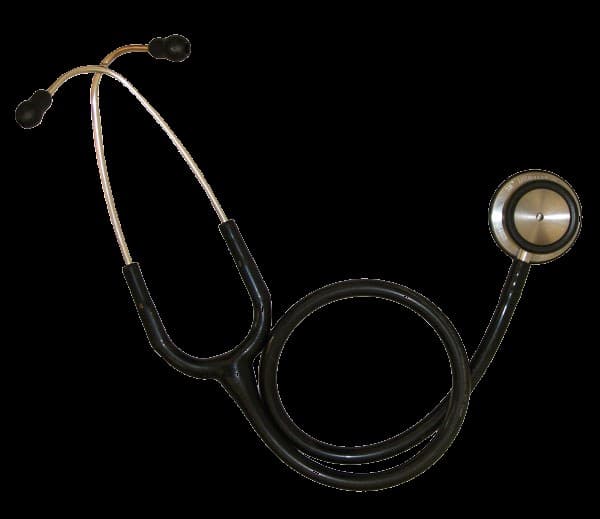
Walk past a clinic window in any Australian capital and you will see the phrase “anti-wrinkle injections”. You will not see the name of the drug. That is not coyness. It is the law of prescription medicines meeting the law of health-service advertising. The product that weakens selected facial muscles is a Schedule 4 medicine. The Therapeutic Goods Administration restricts how Schedule 4 substances may be advertised to the public. Ahpra’s guidelines for advertising a regulated health service restrict how a practitioner may promote that service. Together they explain the vocabulary on the window, and they are the reason this journal uses the same generic language.
This is a piece about regulation, consent and risk — not about how to shop for a treatment. The non-surgical hub collects related explainers, including dermal fillers: risks, regulation and aftercare. Our editorial standards set out why we do not name prescription brands and why we do not publish testimonials.
Prescription-only, not a cosmetic commodity
In the Poisons Standard, medicines are scheduled according to the degree of control required for safe use. Schedule 4 is “prescription only”. The muscle-relaxing proteins used to soften dynamic lines sit in that schedule. So do many of the medicines used as dermal fillers. A substance in Schedule 4 is not to be treated as a retail beauty product, even when the indication being discussed is appearance.
The TGA’s advertising framework follows the schedule. Advertisements to the public must not promote a prescription-only medicine. That prohibition covers the registered trade name, the active ingredient used as a selling point, and the kind of coded reference that everyone in the room would understand as the drug. “Ask us about the brand you have seen overseas” is still advertising. So is a price list that only makes sense if the reader already knows the product.
Clinics therefore write “anti-wrinkle injections”, “wrinkle-relaxing treatment” or similar class language. Journalists writing for the Australian public should do the same unless they are reporting a regulator’s action about a named product in a news sense, which this explainer is not. We describe a class of treatment. We do not advertise a product.
Why the advertising rules are tighter than a shopfront
Ahpra’s Guidelines for advertising a regulated health service apply because the injection is not a facial. It is a health service provided by (or on the responsibility of) a registered practitioner. The guidelines sit alongside the National Law. They prohibit testimonials in advertising. They prohibit statements that create an unreasonable expectation of beneficial treatment. They prohibit the use of images in a way that promises a look. They require that claims be supportable.
The 2022–2023 cosmetic-surgery reforms, and the later tightening of advertising enforcement, were aimed at a market that had begun to talk about prescription injectables as if they were shampoo. Social-media “results”, time-limited package deals, and influencer captions that functioned as reviews all sat uneasily with the rules. Ahpra has published examples of advertising it considers non-compliant. Readers do not need those examples to understand the principle: if a post would look like a testimonial or a product advertisement, it is probably not lawful health-service advertising in Australia.
This site follows the same principle. We do not reprint patient comments. We do not publish before-and-after photographs. We do not say that a treatment is the “best” option or that a reader will look rested, younger or more confident. Those are outcome claims dressed as kindness.
Who may prescribe, and who may administer
A prescription-only medicine requires a prescriber. In ordinary cosmetic practice that is a registered medical practitioner. Nurse practitioners and, in limited settings, other endorsed practitioners may prescribe within their scope; the detail is a matter of registration type, endorsement and state or territory drugs-and-poisons legislation. The person who writes the prescription remains responsible for the assessment.
Administration is a separate act. Some practices are doctor-led: the same practitioner assesses, prescribes and injects. Some use a model in which a registered nurse injects after a medical assessment and prescription. Some have used distant or asynchronous prescribing. Ahpra and the Medical Board have made clear that cosmetic use of these medicines is not a paperwork exercise. There must be a genuine consultation, an assessment of suitability, and informed consent. A model that reduces the prescriber to a signature on a standing order has been criticised for a reason.
Beauty therapists, cosmetic tattooists and unregistered staff are not authorised to take a Schedule 4 medicine and inject it because a client asked. When media reports describe “injectable parties” or salon treatments gone wrong, the legal problem is often this one: the medicine has left the prescribing relationship. Readers who are offered a treatment in a setting that cannot explain who the prescriber is, how the medicine is stored, and who is responsible after hours should treat that as a warning, not as a bargain.
State health departments and pharmacy regulators also care about supply. These medicines must be obtained through lawful wholesale or pharmacy channels, stored as the product information requires, and used before expiry. A practitioner who cannot say where the product came from is not meeting a basic obligation.
Consent is more than a form
Informed consent for a prescription injectable is the same legal idea as consent for an operation, scaled to the intervention. The person must be told, in language they can use, what is proposed, what it is intended to do, what it cannot do, what the common and the serious risks are, what alternatives exist (including doing nothing), and what the plan is if something goes wrong.
For anti-wrinkle injections, that conversation usually includes: the sites proposed; the fact that the medicine weakens muscle and that the effect is temporary; the possibility of asymmetry, bruising, headache and a heavy brow; the particular risk of eyelid or brow ptosis when the forehead or glabella is treated; the rare risk of a more widespread effect; and the need to say if they have a neuromuscular condition, are pregnant, or are taking medicines that the prescriber must know about.
Consent is not valid if it is obtained after the person is already in the chair with a price quoted and a social plan that evening. Cooling-off rules for major cosmetic surgery do not map one-for-one onto injectables, but the underlying ethic does: a person should be able to hear the risks without feeling that they have already bought the treatment. Practices that assess and treat on first contact need to show that the assessment was real.
Photographs taken for a clinical record are not the same thing as advertising photographs. A record photograph can be part of good care. Publishing it as a “result” is a different act and, in Australia, a regulated one.
Ptosis and the other risks that belong in the room
The risk that most people have heard of is ptosis: a drooping upper eyelid, or a brow that sits lower than it did, after product has affected a levator or frontalis function. It is not the most common event. Bruising and a temporary headache are more frequent. Ptosis matters because it is visible, because it can interfere with the visual field if the lid sits low, and because it can last for weeks while the medicine wears off. There is no reliable “reversal” injection for this class of medicine in ordinary practice. Management is expectant, sometimes with supportive measures a practitioner may discuss. It is not a failure of character. It is a recognised complication of a treatment that works by weakening muscle.
Other local problems include asymmetry, a change in smile or speech if a perioral muscle is affected, dry eye or watering if periocular muscles are involved, and a brow that feels heavy rather than looking drooped. Infection is uncommon when the skin is prepared and single-use needles are used; it is not impossible. Allergic reactions are uncommon and are a reason practices keep emergency protocols.
Distant spread — an effect beyond the intended muscle — is described in product information as a rare possibility. Swallowing or breathing difficulty after a cosmetic dose would be an emergency, not an aftercare query. People with certain neurological conditions may be unsuitable. That is a medical judgement, which is one of the reasons a genuine consultation exists.
None of this is a reason to sensationalise the treatment, and none of it is a reason to pretend the treatment is trivial. The honest middle is a list of risks in plain Australian English, offered before anyone lies down.
What a lawful consultation looks like from the waiting-room side
A reader cannot audit a clinic’s wholesale account. They can notice whether the person they meet is a registered practitioner, whether that person’s name can be checked on the Ahpra register, whether the prescription is discussed as a prescription, and whether risks are named without being joked away. They can notice whether they are being sold a package of “areas” before anyone has looked at how their forehead actually moves.
They can also notice the advertising they arrived through. A feed that is all filtered faces and countdown codes is not a clinical document. Our standards page explains why this journal will not amplify that material. A practice that is careful about Ahpra on its website and careless on its Instagram is still advertising.
If fillers are being discussed in the same visit, they are a different class of product with a different emergency profile — vascular occlusion and, rarely, visual loss. Do not let a single consent sheet blur the two. Read the fillers explainer on its own terms.
Aftercare without folklore
Aftercare instructions vary by practitioner and by site. Common advice includes remaining upright for a short period, avoiding rubbing the treated muscles, and postponing strenuous exercise or facial treatments as directed. These are precautions, not guarantees that a complication will be avoided. Bruising can still appear. A lid can still droop.
Anyone with features of an allergic reaction, difficulty breathing or swallowing, or a sudden change in vision should not wait for the clinic to open. Call 000 in an emergency. For advice when the situation is urgent but not obviously an emergency, Healthdirect on 1800 022 222 is the national nurse triage line. The treating practice should also have an after-hours contact; ask for it before you leave.
This article does not tell readers how to obtain a named medicine, how to dose it, or how to inject it. Those are clinical acts. They belong to a registered prescriber and to the product information, not to a journal.
Anti-wrinkle injections are common in Australian rooms. Common is not the same as unregulated. The TGA schedule, the advertising code and the consent process exist because the substance is a medicine. The generic words on the clinic window are doing more work than they appear to.
Questions readers ask
- Why do Australian advertisements say “anti-wrinkle injections” instead of a product name?
- The relevant medicines are prescription-only. The TGA restricts public advertising of Schedule 4 substances, and Ahpra’s guidelines for advertising a regulated health service do not allow a clinic to promote a named prescription product to the public. Generic class language is the lawful form.
- Can a beauty therapist give anti-wrinkle injections in Australia?
- Administration of a prescription-only medicine is not a beauty treatment. A registered medical practitioner (or, in defined circumstances, another authorised prescriber) must prescribe it. Who may inject it, and under what supervision, is a matter of registration, state drugs-and-poisons law and the prescriber’s responsibility. A salon menu is not a prescribing arrangement.
- What is ptosis after anti-wrinkle injections?
- Ptosis here usually means a drooping eyelid or brow after product has affected a muscle that lifts those structures. It is an uncommon but recognised risk, particularly around the forehead and glabella. It is typically temporary. It is one of the reasons a consultation has to cover anatomy and aftercare, not only a price.
- Do I need a face-to-face consultation?
- Anti-wrinkle injections are a regulated health service. Current professional expectations require a proper assessment and informed consent before a prescription-only medicine is used for a cosmetic indication. Remote or “same-day walk-in” models have been the subject of Ahpra scrutiny. Ask how assessment, prescription and follow-up actually work in that practice.
- Are the effects guaranteed?
- No. Duration, symmetry and the degree of muscle weakening vary. Some people notice little change; some notice more than they wanted. This publication does not publish testimonials or promised timelines. A registered practitioner can describe typical ranges and the risks that apply to the sites being discussed.
More in this hub
Laser and energy-based devices in cosmetic clinics
Lasers, intense pulsed light and other energy devices used in Australian cosmetic clinics sit under TGA device rules. Skin of colour, eye protection and the fact that energy is not a substitute for surgery all belong in the consultation.
Tom Hale · 22 April 2025
Dermal fillers: risks, regulation and aftercare
Dermal fillers are a regulated health service in Australia. Vascular occlusion is an emergency, visual loss is a recognised risk, and dissolving agents should be discussed as a class — not as a brand — before anyone is treated.
James Okonkwo · 8 April 2025