Breast reduction, medical and aesthetic considerations
Reduction mammaplasty is discussed for symptoms as well as for appearance. This explainer covers that split, the existence of Medicare criteria without treating a website as an assessor, scars, sensation, and why breastfeeding after reduction cannot be promised.
Priya Menon, Features writer · 1 October 2024 · 7 min read · Updated 14 December 2025
Breast reduction sits on a fault line that Australian health policy has never quite resolved. For one person it is an aesthetic operation: the breasts are healthy and the request is about proportion. For another it is a functional request: straps carve the shoulders, rashes persist under the fold, and exercise has been abandoned. The same family of operation — reduction mammaplasty — is discussed in both rooms. The funding, the paperwork and the tone of the consent are not the same. Pretending they are is how people leave a consult more confused than they arrived.
This is a features piece for readers, not an eligibility calculator. Criteria for Medicare items exist; they change, and they are applied by practitioners and by Services Australia, not by a website. Ahpra’s advertising rules still apply when the language turns cosmetic. We do not publish testimonials, and we do not describe a “life-changing” result. For the neighbouring operations see the breast surgery hub, and our explainers on mastopexy and recovery timelines.
Symptom relief and appearance are both real — and they are not interchangeable
A good history separates what the breasts do from what they look like, then admits that the two overlap. Groove marks from straps, recurrent intertrigo under the fold, difficulty finding a garment that supports the breast during exercise, and a feeling of weight at the end of a working day are the sorts of symptoms people bring. So are comments about posture that may or may not survive a physiotherapist’s examination. Neck and back pain have many causes. A reduction cannot be asked to treat an arthritic cervical spine, a depressive illness, or a job that involves lifting children all afternoon. It can be asked to reduce the volume and the hanging weight of the breasts. Whether that change is enough for this person’s symptoms is an individual matter, and it is dishonest to promise it.
Appearance is not a lesser motive, and it is not a higher one. It is a different one. People who are primarily concerned with shape, nipple position or asymmetry may be in a mastopexy conversation, a reduction conversation, or both. Weight, a planned pregnancy, and whether the person is still moving through a large weight-loss journey all change the timing. Operating on a breast that will change again is not forbidden; it is a fact that should be priced in — financially and emotionally — as the possibility of a further operation.
A GP referral is the ordinary Australian entry point, and for cosmetic surgery it is also a regulatory expectation. Bring a list of medicines, a smoking history, and any previous breast operations or biopsies. Bring the actual complaint, not the complaint you think sounds more medical.
Medicare items, private funds and the sentence this site will not finish
The Medicare Benefits Schedule includes items for reduction mammaplasty when specified clinical criteria are met. Those criteria have included, at various times, documented symptoms, a proposed volume of tissue to be removed, and photographic or clinical requirements set out in the Schedule. This journal will not recite the current thresholds as if they were stable, and it will not tell you that you “should get the item”. Eligibility is a matter for the GP, the operating specialist, and Services Australia. Private health funds, where they pay, follow their own tables and waiting periods and will want to know whether a Medicare item applies.
Ask, in writing: which MBS item, if any, the surgeon intends to use; whether the hospital has confirmed a bed and a theatre under that coding; and what the out-of-pocket gap is if the fund declines. A quote that assumes a rebate you have not confirmed is not a quote. Public-hospital pathways exist in some states for reductions judged to meet that service’s criteria; waits are long and the criteria are local. None of that is a comment on whether the operation is worthwhile. It is a comment on who pays.
Cosmetic advertising law still applies to the way a clinic describes the operation on a website. Language that guarantees a clothing size, a pain score, or a photograph is advertising a regulated health service as if it were a product. Readers can leave that page.
What the operation is doing, anatomically
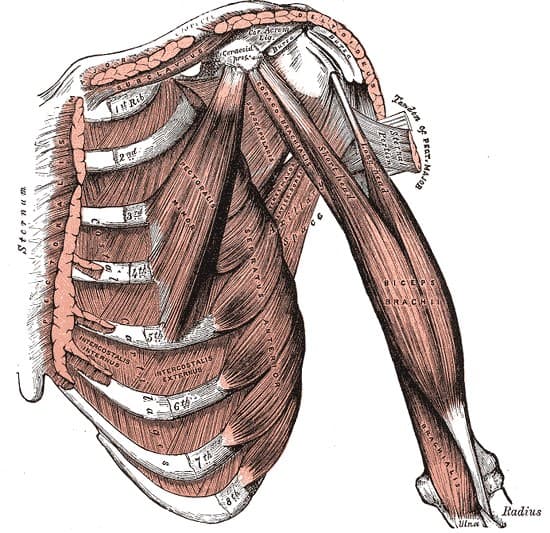
A reduction removes breast tissue and skin and repositions the nipple–areola complex on a new, higher mound. The tissue that keeps the nipple alive — the pedicle — is a design choice (inferior, superior, medial and other patterns exist). The skin pattern determines the scars. In general terms, people hear about a scar around the areola plus a vertical scar (the “lollipop”) or that pattern plus a scar in the inframammary fold (the “anchor” or inverted T). A scar-only-around-the-areola pattern is less often sufficient when a large volume is being removed. Surgeons pick a pattern for blood supply, for the volume planned, and for the quality of the skin, not because one scar is fashionable.
The scars are permanent. They fade for some people and remain obvious for others. Hypertrophic or keloid scars are more often discussed when there is a personal or family history. The fold scar can sit slightly off the fold once swelling settles; bras will cover many scars and will not cover all of them in every garment. This journal will not show you a gallery and will not describe a “faint white line”.
Liposuction is sometimes used as an adjunct for the side of the chest or for a modest volume change. It is not a scarless reduction of a heavy, ptotic breast, because the skin envelope still has to be managed. Combination liposuction-plus-excision is still a reduction, with a reduction’s risks.
Drains may or may not be used. Antibiotics, blood-thinning decisions and the anaesthetic plan are local. The operation is typically performed under general anaesthesia in a licensed hospital with a specialist anaesthetist. Overnight stay is commonly discussed; some services treat selected cases as day surgery. The expected stay is a consent item.
Sensation, the nipple, and the breastfeeding sentence that cannot be neat
The nipple–areola complex is being moved on a stalk of tissue. Blood supply can fail. Partial or complete nipple loss is uncommon and not mythical; it is more often discussed in people who smoke, who have very large reductions, or who have had previous breast surgery. Sensation — to touch, to cold, to erotic feeling — can diminish, change or, less often, become uncomfortably heightened. Recovery of sensation, when it happens, can take months. It is not scheduled.
Breastfeeding is the question people are afraid to ask if they think it will make them sound unserious, and the question they should ask first if they may want a child. Ducts are divided. Tissue is removed. Some people breastfeed afterwards, fully or in part. Some cannot. There is no examination that lets a journalist, or a surgeon, promise a future lactation. If that uncertainty is unacceptable, the honest option may be to defer.
Mammography and screening continue after reduction, with the screening service told that surgery has occurred. Scars and fat necrosis can complicate a film; they are investigated rather than assumed. A new lump is a new lump.
Recovery as a range, and the week no one puts on a mood board
The first week is about swelling, drains if present, showering instructions, and the bra the surgeon wants you to wear — usually a supportive, non-wired style for a period they specify. Pain is typically managed with a written plan; it is not a competition. Movement of the arms is often limited at first. People who care for small children need a second adult in the house. That is logistics, not weakness.
Time away from desk work is often discussed in the order of two weeks; physical jobs, lifting and sport later, commonly in a four-to-six-week band or beyond. Wound problems, haematoma and infection push those ranges out. Numbness over the lower breast and around the scars is frequent in the early period. The final shape is not the shape at day ten. Swelling settles over weeks to months; scars mature over a longer stretch, often quoted as six to twelve months or more. Those are ranges. They are not a promise that you will like a particular photograph at a particular mark.
Urgent review is warranted for sudden unilateral swelling, fever, foul drainage, breathlessness, chest pain, or a nipple that becomes dark and painful in a way that is out of step with the instructions you were given. Call the treating team. If you cannot, call 000 or present to an emergency department. Healthdirect (1800 022 222) is the national nurse line for uncertainty.
Reduction mammaplasty is a real operation with real scars and a real conversation about symptoms, money and future breastfeeding. It can be appropriate for some people after a careful work-up. It cannot be advertised as a cure for back pain or as a shortcut to a wardrobe. Take the Medicare question to the people who can answer it — the GP, the specialist and the fund — and take the anatomical questions to a practitioner whose title matches the Ahpra register. Then give yourself the cooling-off period the rules already expect.
Questions readers ask
- Does Medicare cover breast reduction in Australia?
- There are Medicare Benefits Schedule items for some reduction operations when clinical criteria are met. Whether a person meets those criteria is decided by the treating GP and specialist, and by Services Australia’s rules at the time — not by a journal. Ask the surgeon which item, if any, they would submit, and confirm with your fund.
- Will reduction relieve neck and shoulder pain?
- Some people seek surgery because of symptoms attributed to breast weight — groove marks, skin rashes, difficulty exercising. Symptom change after surgery is individual. No article can promise relief. A consult should also consider other causes of neck and back pain so that an operation is not asked to fix a joint or a workplace problem it cannot reach.
- What do the scars look like?
- Common patterns include a scar around the areola, a vertical scar, and sometimes a fold scar under the breast — described in clinic as lollipop or anchor patterns. Scars mature over months to years and vary with skin type, tension and healing. They are permanent.
- Can I breastfeed after a reduction?
- It is uncertain. The operation moves the nipple–areola complex and divides breast tissue and ducts. Some people lactate afterwards; some do not, or not fully. If future breastfeeding matters to you, that uncertainty belongs on the consent form before a date is set.
- Will nipple sensation change?
- It can. Sensation may decrease, increase in an uncomfortable way, or return in part over months. Complete loss is possible. The risk is one reason surgeons talk about technique and about how far the nipple is being moved.
More in this hub
Implant revision and explant surgery
Why breast-implant revision happens — rupture, contracture, malposition, preference — and how explant with or without a lift is discussed, including imaging and the fact that no operation can promise a return to a pre-implant appearance.
Tom Hale · 29 October 2024
Breast lift (mastopexy), explained
How a mastopexy differs from a reduction and from an implant, what scar patterns are discussed in general terms, why gravity and ageing continue after surgery, and why combining a lift with another breast operation adds risk.
Priya Menon · 15 October 2024
Breast augmentation, implants and Australian regulation
How the TGA regulates breast implants as devices, what registries are for, why BIA-ALCL is raised as a rare risk, and how sizing and screening are discussed in Australian rooms — without advertising a brand.
Tom Hale · 17 September 2024