Rhinoplasty explained for Australian patients
Functional and aesthetic aims, the airway, grafting, why revision is a different operation, and recovery described in general terms — without a promised shape.
Priya Menon, Features writer · 8 July 2024 · 9 min read · Updated 20 January 2026
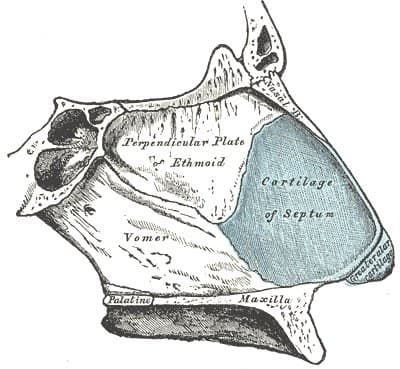
The nose is a corridor for air before it is a line on a photograph. That order is easy to invert in a culture that treats rhinoplasty as a profile transaction. In an Australian specialist rooms the conversation, if it is being held properly, starts with skin, cartilage, septum, valves and the way those structures behave over time. It does not start with a promised shape.
This explainer is for readers who want to know what is being discussed when someone says “functional”, “aesthetic”, “open”, “graft” or “revision”. It belongs with the rest of our facial surgery hub. It does not tell you that you are a candidate. It does not describe a patient who “breathes and looks better”. Outcomes vary. Some people have further surgery. Some people are advised not to have the first operation. Adjacent reading includes eyelid surgery and recovery timelines in general terms.
Two aims that are allowed to conflict
Functional rhinoplasty, septoplasty and related airway operations are aimed at airflow: a deviated septum, collapsed valves, turbinate enlargement, or the aftermath of trauma. Aesthetic rhinoplasty is aimed at the external appearance of the dorsum, tip, nostrils or width. The same anaesthetic can include both. They are still different aims. A change that narrows a bridge on a photograph can narrow an airway in a body. A change that opens an airway can alter a profile in a way the patient did not come in to request.
A practitioner who treats those aims as automatically aligned is simplifying. A practitioner who refuses to discuss breathing because the appointment was labelled “cosmetic” is also simplifying. The Medical Board’s cosmetic-surgery guidelines require a discussion of alternatives, including not operating. For a nose, “not operating” may include medical treatment of rhinitis, a sleep assessment, or leaving a bump that is not obstructing air.
Medicare sits in the background of this distinction. Benefits are not payable for non-therapeutic cosmetic services. Some airway or septal items may be billed when the clinical criteria in the Medicare Benefits Schedule are met. Private health insurance, if you have it, follows its own clinical categories. None of those payment rules is a judgement about whether you should proceed. They are a reason to ask the operating practitioner and your GP to put the item numbers, if any, in writing, and to say clearly which part of the plan is cosmetic.
The structures behind the vocabulary
The external nose is skin, subcutaneous tissue, bone in the upper vault, and paired cartilages below. Gray’s plates still used in teaching hospitals show upper lateral cartilages and the alar, or lower lateral, cartilages that form much of the tip and nostril rim. Inside, the septum is a midline wall of cartilage and bone. The inferior turbinates are shelves that warm and humidify air. The internal and external nasal valves are narrow regions where small changes in angle or support have large effects on flow.
Skin thickness matters and cannot be chosen from a menu. Thicker skin can hide a delicate cartilage change and stay swollen longer. Thinner skin can show every irregularity. Neither is “better”. Both belong in the consent conversation because they limit what an operation can express on the surface.
The airway is not a straight pipe. Collapse on inspiration, a septal spur, allergy, and previous fractures can all produce the same complaint — “I cannot breathe through the left side” — for different reasons. That is why a serious assessment may include endoscopy, a history that sounds more ENT than cosmetic, and a reluctance to operate on a nose whose main problem is untreated mucosal disease.
Smell, mucus, snoring and sleep are part of the same organ. They will not all be improved by a change to the dorsum. Some can be worsened. If smell is already reduced, say so. If you use CPAP, say so. If you play a wind instrument or train at a high level, say so. Those details change what a material risk is for you.
Approaches, in general terms
Surgeons describe access as closed (incisions mostly inside the nostrils) or open (a small incision across the columella, the strip of skin between the nostrils, plus internal incisions). Each approach is a way of seeing and supporting cartilage. Neither is a personality. Neither can be advertised as the modern method that avoids swelling. Swelling is a feature of operating on a nose, not a feature of a brand of incision.
What happens after the skin is lifted is the operation: hump reduction or preservation, osteotomies (controlled bone cuts) to change width, tip suture techniques, weakening or strengthening of cartilages, and — often — grafts. The details belong to the person who would operate and to the consent form they should be willing to explain twice.
Combined procedures are common in discussion and easy to underestimate. A chin operation, a septum, sinus work, or an eyelid procedure in the same anaesthetic changes time, swelling and risk. Blepharoplasty has its own dry-eye and vision issues. Bundling to save a facility fee is not a clinical argument until those issues have been walked through separately.
Grafting is structure, not a finish
When surgeons talk about grafting they are talking about borrowing support. Septal cartilage is often the first reservoir. If the septum has already been operated on, or if a large volume of support is needed, cartilage may be taken from the ear (conchal cartilage) or from a rib. Each donor site has its own scar, pain and complication profile. Synthetic or processed materials are sometimes discussed; they are devices or tissues with their own regulatory and infection conversations, not upgrades.
Spreader grafts, alar-batten or lateral-crural support, tip grafts and diced cartilage in fascia are names you may hear. You do not need to memorise them. You do need to know whether the plan depends on extra support, where that support would come from, and what happens if a graft warps, resorbs, becomes visible, or becomes infected.
Grafting is one reason primary rhinoplasty and revision rhinoplasty are not the same operation. A first operation that removes support to chase a smaller line on a photograph can leave the next surgeon with less septum and more scar. That is not a morality tale about vanity. It is mechanics.
Revision is a different difficulty
Scar tissue does not respect planes. Blood supply is less forgiving. Landmarks that a textbook treats as constant have been moved. Patients sometimes arrive at a second rooms with a request to “just undo” a first operation. Undoing is rarely available as a function. Further change may be possible. It may also be limited enough that the honest recommendation is to wait, or to live with a result that is not what was hoped for.
Revision also concentrates the title problem. A nose that has already been operated on is a reason to check specialist registration with more, not less, care, and to ask how often that practitioner performs secondary rhinoplasty. Frequency is not a ranking. It is a way of finding out whether you are an usual case in that rooms.
Expect a longer consultation, a more cautious consent, and a higher chance that the practitioner will decline. Decline is a clinical outcome. It is not a dare.
Risks that belong in the first conversation
Bleeding and infection are the general surgical risks. Septal haematoma is a specific emergency: a collection of blood that can destroy cartilage if it is not treated. Septal perforation — a hole in the septum — can whistle, crust and bleed. Numbness of the incisors or the palatal gum can follow septal work. Smell can change. Skin can bruise in patterns that alarm people who were only told about “a bit of swelling”.
Airway change cuts both ways. An operation intended to improve flow may not. An operation intended only to change shape may reduce flow, especially if valves are not supported. Asymmetry is common enough to discuss without treating it as an insult. Further surgery is a possibility, not a free extra.
Anaesthetic risks belong to the anaesthetist you should be allowed to name. Facility risks belong to the hospital or day hospital you should be allowed to locate. If those names are vague, the consent is vague.
Rare events still need a sentence: serious infection, visible deformity, and the small possibility of a life-threatening anaesthetic or embolic event. “Rare” does not mean “not material” if knowing it would change your decision.
Recovery, described without a calendar promise
The first days often involve a splint or taping, mouth breathing, and a face that looks more operated-on than the preoperative photograph. Bruising around the eyes is common when bone is cut. Pain is usually discussed as manageable, which is not the same as absent. Sleeping with the head raised, avoiding blows, and staying out of dusty or very dry air are typical instructions; your own practitioner’s written advice is the one that applies.
Many people return to desk work within a couple of weeks. That is a population-level observation, not your clearance. Driving, glasses resting on a splint, exercise that raises blood pressure, contact sport, and long-haul flights sit on different clocks. Events — weddings, photographs, court appearances — are poor reasons to compress those clocks.
Subtle swelling, particularly in the tip, can last months. Seasons, skin type, salt, menstrual cycle and a second procedure can all change what you see in the mirror on a given morning. This is why no responsible journal, and no Advertising-compliant clinic, should give you a date on which you will have “the result”. If a rooms uses that sentence, treat it as advertising and go back to the consent form.
When to seek urgent care is a recovery question: sudden swelling on one side, a septal haematoma suspicion, heavy bleeding, fever, shortness of breath, or a rapid change in vision if eyelid surgery was combined. Those symptoms are for 000 or an emergency department, not for an Instagram message. General aftercare ranges live in the recovery timelines essay.
What a consultation should sound like
You should be asked about breathing, smell, sinus disease, trauma, cocaine or other intranasal drug use, previous operations, and what, exactly, you dislike. You should be asked about body-image distress and screened for body dysmorphic disorder if the operation is cosmetic surgery under the Board’s definition. You should not be asked to sign at the first visit. You should leave with a description of the plan that your GP can read.
Photographs and, sometimes, computer images are planning tools. They are not a contract. A simulated profile is a sketch of an aim. Skin, healing and the airway can refuse the sketch. Ahpra’s advertising rules already restrict the use of before-and-after images to promise a look. A consult-room simulation used as a promise is the same problem in a quieter room.
Ask what the operation will not do. It will not freeze ageing. It will not restage a relationship. It will not give you a relative’s nose unless that relative’s skin, septum and bones are also available, which they are not. If the practitioner cannot tolerate those limits in the conversation, they will not tolerate them in the recovery period either.
How to read this beside other facial operations
Rhinoplasty is often discussed in the same year as eyelid surgery, chin contouring or a facelift. Staging has a clinical logic: swelling from one field can hide problems in another; anaesthetic time accumulates; your ability to care for yourself after two operations is not double your ability after one. The facial surgery hub exists so those operations can be read as a set of limits rather than as a package holiday.
Take the airway seriously even if you came in with a photograph. Take the photograph less seriously than the register listing of the person who would operate. Take “revision later if needed” as a risk to be costed and consented, not as a comfort. And take the option of no surgery as a plan that does not require a graft, a splint or a promised profile — only the decision to keep the nose you already know how to breathe through.
Questions readers ask
- Is rhinoplasty only a cosmetic operation?
- No. Many discussions in Australian rooms involve the septum, turbinates or nasal valves as well as the external shape. A purely aesthetic request and a request about breathing are different aims and may lead to different operations, or to a decision not to operate.
- Why do surgeons talk about grafts?
- Cartilage or other supporting tissue is sometimes used to support the bridge, tip or valves, especially when structure has been weakened or was never strong. Grafting is a technical choice with its own risks. It is not a guarantee of a particular profile.
- Why is revision rhinoplasty often described as more difficult?
- Scar tissue, altered anatomy and less remaining septum change the operation. A revision is not a repeat of the first procedure at a discount. It needs its own consent, including the possibility that further change will be limited.
- How long does swelling last?
- Visible bruising and swelling often settle over weeks, but subtle swelling, especially in the tip, can persist for many months. Published ranges vary. No responsible account will give you a date on which the nose is “finished”.
- Will Medicare pay for a cosmetic change to the nose?
- Medicare benefits are not payable for non-therapeutic cosmetic services. Some septal or airway operations may attract a rebate when clinical criteria are met. That is a question for your GP and the operating practitioner, not a promise this journal can make.
More in this hub
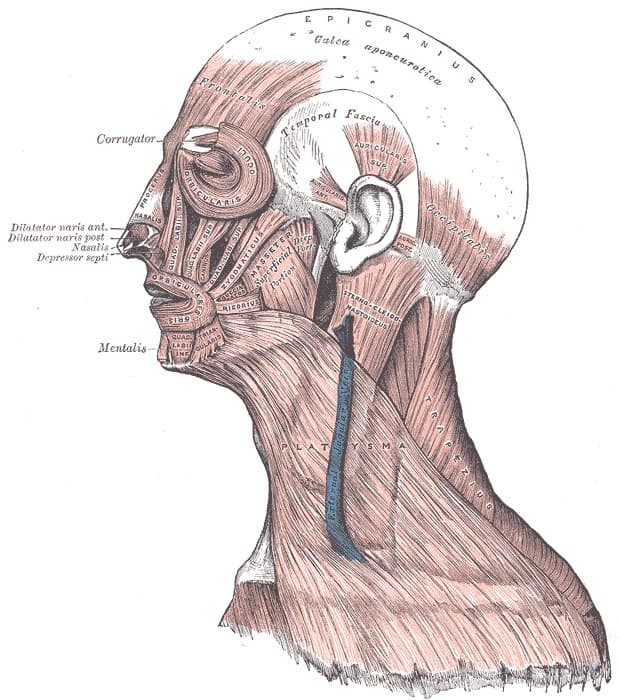
Chin and jaw surgery, including genioplasty
Genioplasty, chin implants and orthognathic jaw surgery are different operations. This explainer covers occlusion, joint planning with orthodontics, and why a hospital stay is part of the conversation for some — but not all — of these procedures.
Tom Hale · 3 September 2024
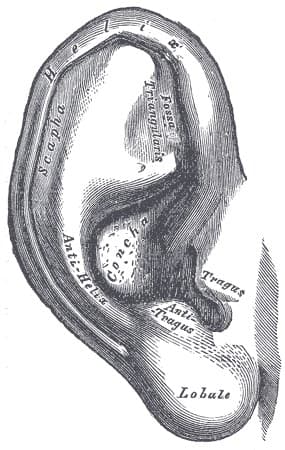
Otoplasty for prominent ears
How Australian consultations discuss prominent-ear surgery in children and adults — timing, cartilage, head-band aftercare and the return to school or sport as matters for the operating surgeon, not a website timetable.
Priya Menon · 19 August 2024
Facelift surgery, candidacy and recovery
A journalist’s guide to how Australian rooms discuss facelift candidacy, SMAS versus skin-only approaches, neck work, anaesthesia and haematoma risk — with recovery described as ranges, not promises.
Priya Menon · 5 August 2024